Manta V31 is a critical raw material with two primary industrial applications:
- Polymer Modification & Silane Crosslinking (Wire, Cable & PEX Pipes)
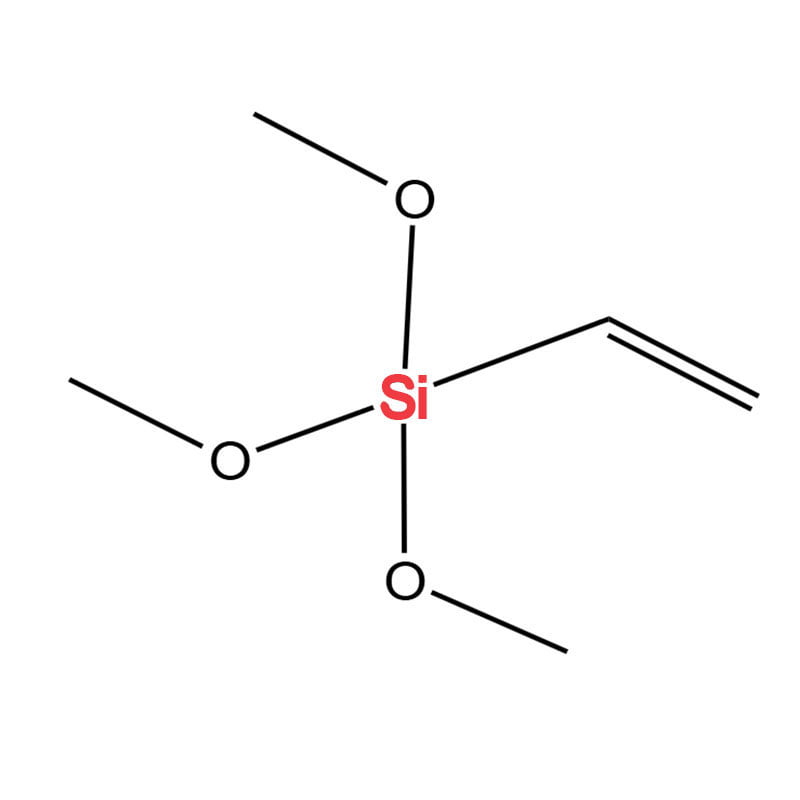
Manta V31 is widely used to modify polyethylene (PE) and other polymers. Using a peroxide initiator in an extruder, the vinyl group grafts to the polymer backbone. The resulting grafted polymer is then shaped (e.g., cable jacketing, wire insulation, PEX-b pipes) and exposed to moisture/hot water. This causes the trimethoxysilyl groups to hydrolyze and condense, forming a robust Si-O-Si crosslinked, thermoset network.
- 2. Moisture Scavenger in Adhesives & Sealants
Due to its rapid reaction with water, V31 is extensively utilized as a moisture scavenger in one-part moisture-curing formulations (such as Silane-Modified Polymers/MS, Polyurethanes, and Silicones). It consumes trace amounts of moisture during compounding and packaging, drastically improving the shelf-life and preventing premature gelation or outgassing in the cartridge.
- Co-monomer for Polymer Emulsions (Water-Borne Coatings)
The reactive vinyl group allows V31 to copolymerize with acrylics or vinyl acetate monomers during emulsion polymerization. This produces silane-modified, water-borne dispersions that exhibit dramatically improved wet scrub resistance, weatherability, and crosslinking density upon drying.
- Surface Treatment for Mineral Fillers (HFFR Cables)
Acts as a highly effective surface modifier for inorganic flame-retardant fillers, such as Aluminum Trihydroxide (ATH) and Magnesium Hydroxide (MDH), utilized in Halogen-Free Flame Retardant (HFFR) cables. It improves filler dispersion, water resistance, and mechanical strength in highly filled polymer composites.
- Adhesion Promoter for Specialty Resins
Functions as an excellent adhesion promoter and coupling agent specifically tailored for unsaturated polyesters and acrylic resin systems, and is frequently employed as a sizing agent for fiberglass composites.
Benefits of Silane Crosslinking (vs. Uncrosslinked Polymers)
- Significantly higher maximum continuous use temperature.
- Reduced deformation under load (creep resistance).
- Superior Environmental Stress Crack Resistance (ESCR).
- Improved impact strength, abrasion resistance, and chemical resistance.
- Provides distinct memory characteristics (crucial for shrink films and heat-shrink tubing).
Advantages of Silane Crosslinking over Radiation or Peroxide Methods
- Low capital investment and lower operating (energy) costs.
- Higher productivity with wider processing latitude (controls premature crosslinking/scorch).
- Processing versatility: accommodates complex shapes and variable thicknesses (thick or thin).
Highly useful with heavily filled composites and applicable to all PE densities and copolymers.